Railroad Ink Challenge
- 4.2
- Rating
- 10.00K
- Installs
- $3.99
- Price

 Analysis by App-foxy
I approached Railroad Ink Challenge as a small, focused board game rather than a digital replacement for a large tabletop collection. Its central appeal is easy to understand: each turn asks me to use dice results to build a connected network of roads and railways on a compact board. That sounds simple, but the decisions become surprisingly demanding once I try to keep routes connected, use limited space well, and plan for scoring instead of merely filling empty squares.
Developed by Horrible Guild, this is a paid board game for Android, with a price of $3.99 and optional in-app purchases priced at $1.99 per item. It is rated for Everyone, runs on Android 6.0 or later, and the current version is 3.4.2. The game has an average rating of 4.2 from around 700 ratings, with more than 10,000 installs. Those figures suggest a modest but established audience, which fits my experience: this is a niche strategy title for people who enjoy thoughtful turns more than constant action.
How clearly the board communicates what I need to do
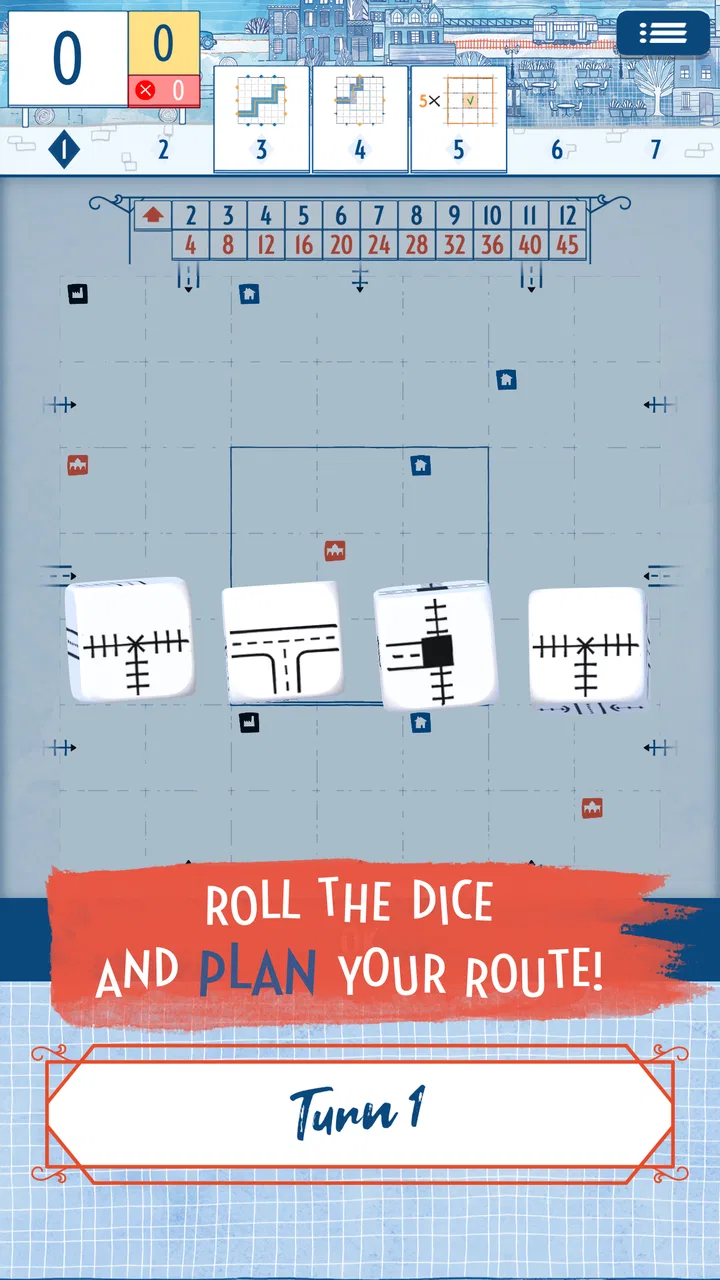
The strongest part of the presentation is the way the game reduces a complicated planning problem to a small set of visible choices. I can see the dice results, examine the available route shapes, and decide where each piece should go. The board itself becomes a personal puzzle, so I do not need to remember a long sequence of rules while playing. Once I understand the symbols, the basic turn structure feels orderly.
You May Also Like

 Pandora - Music & Podcasts
Pandora’s Music Is Easy to Start, but Harder to Recover
Pandora’s strength is its low-effort path from a seed to a station. Its weak spot is how much confidence it asks you to place in connection, setup, and quiet recovery.

 AccuWeather: Weather Radar
AccuWeather Review: A Quick, Clear Forecast for Everyday Decisions
For everyday plans, the best forecast is the one you can understand quickly. AccuWeather makes rain timing, radar, and local conditions easy to act on, with a few trade-offs.

 Hill Climb Racing
Why Hill Climb Racing Still Turns Crashes Into One More Run
A tiny car, a bumpy hill and one more upgrade: Hill Climb Racing keeps resurfacing because its simple chaos makes every near-miss feel personal.

 AliExpress - Shopping App
AliExpress Makes Global Shopping Feel Personal, but Shoppers Bear the Risk
AliExpress turns a global marketplace into a pocket-sized discovery engine. Its reach is useful, its shopping loop compelling, and its trade-offs easy to miss.

 Lords Mobile: Kingdom Wars
Lords Mobile Is a Kingdom-Building Routine, Not a Quick Match
A case-by-case verdict on the building, battles, device demands, and social commitments that make Lords Mobile rewarding for some players and exhausting for others.

 PDF Scanner app - TapScanner
TapScanner Makes Paperwork Easier to Capture, Check, and Share
TapScanner makes scanning with a phone feel less like a rescue operation and more like a dependable step in getting work done. Its capture tools are useful, though not flawless.
More From Our News Desk
View All News


That clarity matters for players who prefer calm, visual decision-making. I do not have to react to a timer or follow a stream of rapidly changing events. I can pause mentally between placements, inspect the developing network, and think about whether a short-term connection will create a larger problem later. In my experience, this makes the game approachable even when the scoring possibilities are less obvious at first.
The main readability challenge comes from the route symbols. Roads, railways, junctions, stations, and endpoints can look similar when the board becomes crowded. A new player may understand the individual pieces but still need time to read the whole network at a glance. That is not a flaw unique to the app; it is part of the physical puzzle the game is recreating. Still, anyone with difficulty distinguishing small visual details should expect the later turns to require extra concentration.
I found it helpful to treat each turn as two separate checks. First, I looked at what the dice allowed. Then I inspected the board for open connections before thinking about points. This simple habit prevented many avoidable mistakes. It also made the interface feel less overwhelming because I was not trying to solve the entire game in one glance.
Navigation is similarly focused. The app is built around playing the game, not around a large collection of menus or social screens. That is useful when I want to start a quick session without learning a complicated interface. The trade-off is that players looking for extensive customization, elaborate tutorials, or a broad range of presentation options may find the experience more utilitarian than polished.
Why the compact layout helps some players
A small board can be an advantage for people who become tired when tracking many areas at once. The action stays in one place, and the number of decisions is limited enough to discuss with another person. I can focus on one route, compare it with a nearby possibility, and gradually build a plan. This is much less mentally scattered than a typical action game with several moving targets.
It also works well for teaching. When I explain the game to someone new, I can point to the board and describe the purpose of a connection without asking them to memorize a large ruleset. The first few rounds are still more enjoyable when both players accept that imperfect networks are normal. Trying to build a flawless map immediately is a quick way to make the game feel harder than it needs to be.
There is an important distinction between simple rules and simple decisions. The rules are approachable, but good placement requires spatial reasoning, foresight, and comfort with trade-offs. Someone who enjoys puzzles may appreciate that depth. Someone searching for a relaxing game with almost no planning may not. The interface does not remove the strategic demand; it only presents it in a compact form.
Motor, sensory, and cognitive considerations during play
From a motor perspective, the game is gentler than titles that depend on rapid tapping, precise timing, or repeated gestures. My turns are based on selecting and placing route elements, so the pace is naturally deliberate. That makes it suitable for players who prefer not to perform quick actions under pressure. It also means that a mistake in placement can feel more significant, because each move is the main event of the turn.
For players with limited dexterity, the most important practical issue is accuracy. Route pieces need to be placed in the intended spaces and aligned with neighboring connections. Slow play reduces the risk, but a crowded board can still make selection and confirmation less comfortable. I would recommend using a larger screen when possible and playing in a steady position rather than trying to manage a full session while walking or multitasking.
The game’s visual nature is both its strength and its main sensory demand. The board, dice, and route shapes carry much of the information, so players with low vision or color-vision differences may need to test whether the symbols remain distinguishable on their device. I would not assume that a particular display setting solves every issue. Screen size, brightness, contrast, and personal familiarity with the icons can all change how comfortable the experience feels.
Sound is not the reason I play this game. The essential information is on the board, which is useful when I am in a quiet public place or cannot rely on audio. I can concentrate on the visual state of the network rather than needing spoken instructions. At the same time, players who depend on audio cues for important game information should not treat this as an audio-led experience.
Cognitive load grows in a specific way. The opening turns are usually easy to follow because there is plenty of open space. Later, several concerns compete for attention: keeping routes connected, avoiding awkward dead ends, using special opportunities wisely, and protecting future scoring potential. I found that taking a brief pause before every placement helped more than trying to play quickly. The game rewards reflection, and rushing mostly creates cleanup work.
Useful habits for clearer, less tiring sessions
- Separate placement from scoring. I first ask where a piece can legally and sensibly fit, then consider what that choice contributes to the final network.
- Keep the board physically comfortable. A stable grip and a larger display make route alignment easier than playing in a cramped position.
- Use short sessions when attention is limited. The puzzle is compact, but the later decisions can be mentally dense.
- Explain symbols before strategy. A new player benefits more from recognizing connections than from hearing every scoring possibility at once.
These habits do not change the rules, but they make the game easier to approach. They also reveal who may struggle. Players who need strong text enlargement, high-contrast customization, or extensive alternative input options should investigate the actual presentation on their device before committing. The game’s design is visually direct, but direct does not automatically mean accessible to every visual or motor profile.
How it fits different places and everyday routines
This is one of the better choices in the category for a short, self-contained thinking break. I can imagine playing it during a commute while seated, during a quiet lunch break, or at home when I want something more engaging than a casual matching game but less demanding than a long strategy campaign. The route-building format gives me a satisfying beginning, middle, and end without requiring a large time investment in a continuing world.
A realistic use case is a shared session with a friend who does not normally play complex digital board games. I can explain the goal by showing how one route connects to another, then let the person discover the consequences of each placement. Because both players can think through the board rather than race through actions, the conversation stays part of the experience. It works especially well for people who enjoy comparing decisions after a turn.
It is less suitable when I only have a few seconds of attention. If I am standing in a noisy queue, switching between messages, or frequently interrupted, I may lose track of why a particular space mattered. This is not an idle game that I can operate without looking. Its low physical intensity should not be confused with low attention requirements.
The Everyone age rating makes it broadly appropriate from a content perspective, and I found the theme easy to share with family members. However, younger players may still need help with the planning side. The challenge is not mature subject matter; it is understanding why an apparently good connection can create a poor network later. A child who enjoys drawing maps or arranging shapes may take to it quickly, while another may prefer a more immediate board game.
The paid entry price also affects where it belongs in a person’s collection. At $3.99, I see it as a low-cost specialist purchase rather than an impulse freebie. The optional $1.99 items may matter to players who want additional content, but I would first decide whether the core route-planning loop suits me. If I want a broad free library, a social party game, or a constantly changing competitive service, this is probably not the right purchase.
Compared with familiar alternatives
Compared with a traditional physical roll-and-write game, the app is more convenient because I do not need paper, pencils, dice, or a table. It also removes some setup friction. The physical version of this kind of game can feel more social and tactile, though, especially when several people are drawing and discussing their boards together. I would choose the app for portability and solo convenience, and a tabletop session when the group interaction is the priority.
Compared with digital chess or checkers, this game is less confrontational and more about managing your own construction. I am not constantly responding to an opponent’s threats in the same direct way. That makes it friendlier for players who enjoy strategy but dislike head-to-head pressure. Chess remains the better choice for deep competitive study, while this offers a shorter and more contained puzzle.
Compared with a casual puzzle game, the result of a turn feels less disposable. A route decision changes the shape of the whole board, so I have a reason to think ahead. The downside is that a poor early choice can remain visible for the rest of the session. Players who want instant resets and constant rewards may find the deliberate pace too restrained.
Where the experience still creates barriers
The first barrier is the learning curve hidden inside the friendly presentation. I can understand what to do quickly, but understanding what makes a strong move takes longer. The difference between a legal placement and a useful placement is central to the game. New players may need several attempts before they stop treating every open space as equally valuable.
The second barrier is visual crowding. As networks expand, the board carries more information, and route intersections become harder to parse. This can be tiring for anyone who has difficulty with small symbols or dense layouts. It also affects experienced players when they are trying to compare several possible placements. I recommend zooming or enlarging the playing area if the device makes that comfortable, but the game remains fundamentally dependent on seeing the board clearly.
A third limitation is that the slow pace does not automatically make every situation comfortable. A player who is easily distracted may appreciate the absence of frantic action but still struggle to return to a complex board after an interruption. I found it easier to play when I could finish a complete session without repeatedly changing tasks. The game asks for sustained visual attention even though it does not demand speed.
There is also a social trade-off. The app is convenient for solo play and quick personal sessions, but it cannot reproduce every feeling of spreading a physical sheet across a table, passing dice around, and reacting to another person’s choices in the same room. If the social ritual is the main reason I play board games, I would choose a physical alternative or a more explicitly multiplayer-focused title.
Finally, the optional purchases deserve a measured approach. The core price is clear, but the presence of $1.99 items means the total cost can rise if I decide to collect extras. I would not call that a problem by itself, yet it is worth setting expectations before buying. The best value comes when I already enjoy the main loop and see additional content as a bonus rather than as something required to make the game worthwhile.
My inclusive verdict on the route-planning puzzle
I recommend Railroad Ink Challenge to players who like visual puzzles, compact strategy, and the satisfaction of gradually improving a messy network. It is particularly appealing if I want a board game that avoids reflexes and heavy narrative while still giving me meaningful decisions. The Everyone rating makes it easy to consider for family play, but the strategic depth means that different ages and abilities may enjoy different parts of it.
Its accessibility is best understood as situational rather than universal. The calm pace and limited need for rapid input are genuine strengths. The visual board, small route details, and growing cognitive load are genuine constraints. Players with strong visual processing and a preference for deliberate planning will likely feel supported by the structure. Players who need extensive display customization, audio-first guidance, or very simple low-attention play may need a different option.
My practical advice is to approach it as a focused puzzle, not as a background pastime. Give yourself a comfortable screen, learn the symbols before chasing high scores, and accept that early boards may look imperfect. That mindset makes the mistakes useful: each awkward connection teaches me to consider future space rather than only the immediate dice result.
In the end, Horrible Guild has made a thoughtful digital board game with a clear identity. It does not try to entertain everyone, and that is part of its appeal. I would buy it for a friend who enjoys planning routes on paper, weighing small trade-offs, and replaying a compact challenge to make a cleaner network next time. I would skip it for someone seeking fast action, rich story, or effortless accessibility. For the right player, though, the best feature is the quiet satisfaction of turning random route pieces into a plan that feels entirely my own.
FAQs for Railroad Ink Challenge
01What is Railroad Ink Challenge?
Railroad Ink Challenge is a relaxing yet strategic puzzle board game in which you connect highways and railways on a personal grid. Each turn gives you randomly selected route pieces that must be placed carefully to create connected networks, reach exits, and complete objectives. Its simple rules are easy to learn, but planning efficient routes becomes increasingly challenging as the board fills up.
02How does a typical game of Railroad Ink Challenge work?
At the beginning of each round, the game provides a set of route shapes, usually representing roads, railways, or special station pieces. You decide where to draw or place them on your board, trying to connect matching exits and complete available goals. Every placement is permanent, so careless moves can create dead ends or waste valuable spaces. The game rewards both short-term decisions and long-term planning.
03Can Railroad Ink Challenge be played offline?
Railroad Ink Challenge is well suited to offline play, making it convenient for travel, commuting, or situations without a reliable internet connection. The core puzzle experience does not depend on constant online access. However, certain features such as leaderboards, online-related services, advertisements, or updates may require connectivity depending on the version and platform you install.
04Does Railroad Ink Challenge support solo and multiplayer play?
Yes, the game is designed to work particularly well as a solo puzzle experience, allowing you to focus on improving your score and solving each board more efficiently. Depending on the edition or platform version, it may also include competitive options, shared challenges, or multiplayer-related features. Check the store listing for the exact modes available on your Android or iOS device.
05Is Railroad Ink Challenge suitable for beginners and children?
Railroad Ink Challenge is accessible to beginners because its basic gameplay is straightforward: place route pieces and connect networks on a grid. Nevertheless, achieving high scores requires spatial awareness, forward planning, and an understanding of how routes can block one another. It is generally suitable for families and older children, although younger players may need help reading objectives and planning complex connections.
Pros
- Simple rules make it easy to start playing within minutes.
- Multiple board layouts and goals add variety between sessions.
- Solo mode works well for short
- focused gaming sessions.
- Dice rolls create tension without making every move feel random.
- Clean visuals make routes and connections easy to follow.
Cons
- Limited interaction may disappoint players seeking a competitive multiplayer game.
- Some turns can feel repetitive after several consecutive plays.
- A poor early roll can restrict your scoring options significantly.
- The small board may feel cramped when planning complex networks.
- Advanced goals can be difficult to understand without careful reading.

Railroad Ink Challenge
Gallery